Tucson Preferred vs N Line Hybrid vs top PHEV: Three Powertrains for Every Driver
February 24 2026,
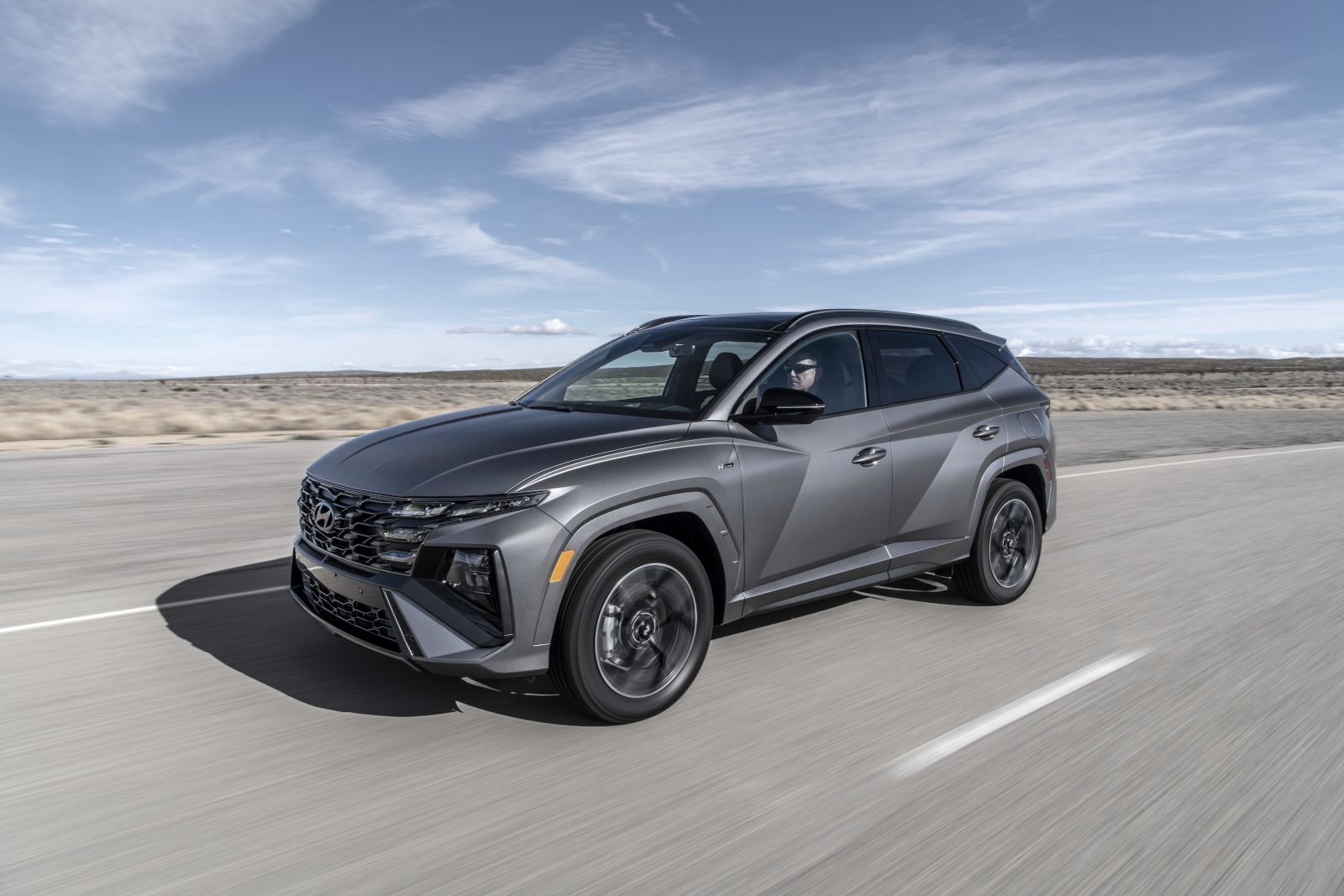
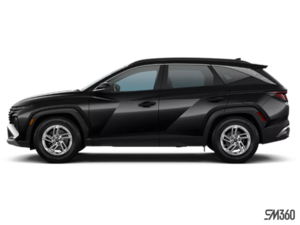
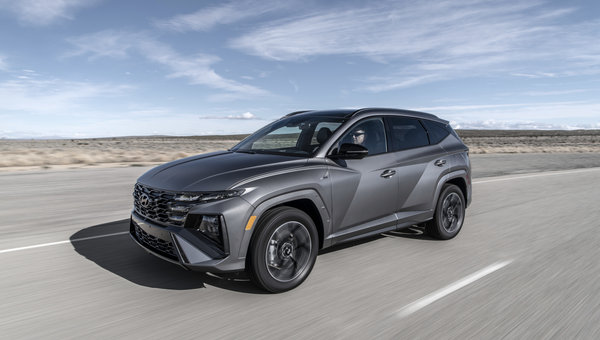
The 2026 Hyundai Tucson lineup offers three distinct powertrains, each delivering a different driving experience. The Tucson Preferred uses a 2.5L gasoline engine producing 187 hp, the N Line Hybrid pairs a 1.6L turbo engine with electric assist for 231 hp, and the top Plug-in Hybrid pushes output to 268 hp while offering 51 km of electric-only range. Understanding how these powertrains differ helps drivers in New Brunswick choose the configuration that matches their priorities.
All three configurations come standard with HTRAC All-Wheel Drive and seating for five. The choice between them depends on whether you prioritize straightforward performance, improved fuel efficiency, or the ability to drive on electricity for short trips. Each powertrain pairs with specific trim levels and feature sets, creating distinct ownership experiences within the Tucson family.
At a Glance: Powertrain Comparison
|
Feature |
Preferred (2.5L Gas) |
N Line (1.6L Hybrid) |
|
Combined Power |
187 hp |
231 hp |
|
Combined Torque |
178 lb-ft |
271 lb-ft |
|
Transmission |
8-speed automatic |
6-speed hybrid automatic |
|
Fuel Economy (Combined) |
8.8 L/100 km |
6.7 L/100 km |
|
Battery Capacity |
N/A |
1.49 kWh |
|
Feature |
top (1.6L PHEV) |
|
Combined Power |
268 hp |
|
Combined Torque |
271 lb-ft |
|
Transmission |
6-speed hybrid automatic |
|
Fuel Economy (Combined) |
6.7 / 3.1 L/100 km |
|
Electric Range |
51 km |
|
Battery Capacity |
13.8 kWh |
Performance and Efficiency
The Tucson Preferred uses a naturally aspirated 2.5L engine delivering 187 hp at 6,100 rpm and 178 lb-ft of torque at 4,000 rpm. This engine runs on regular unleaded fuel and pairs with an 8-speed automatic transmission featuring SHIFTRONIC and paddle shifters. The powertrain includes Engine Idle Stop & Go technology and offers multi-terrain control modes for snow, mud, and sand conditions. Combined fuel economy registers at 8.8 L/100 km.
The N Line Hybrid steps up to a 1.6L turbocharged engine working alongside a permanent magnet synchronous motor. The gasoline engine alone produces 178 hp at 5,500 rpm and 195 lb-ft of torque between 1,500 and 4,500 rpm. The electric motor adds 47.7 kW and 195 lb-ft of torque from 0 to 1,700 rpm. Combined system output reaches 231 hp and 271 lb-ft of torque. A 6-speed hybrid automatic transmission manages power delivery, while a 1.49 kWh lithium-ion battery supports the electric motor. Fuel economy improves to 6.7 L/100 km across city, highway, and combined cycles.
The top Plug-in Hybrid uses the same 1.6L turbo engine but pairs it with a more powerful 72 kW electric motor producing 224 lb-ft of torque at 2,200 rpm. Total system output climbs to 268 hp between 1,500 and 5,500 rpm, with 271 lb-ft of torque available from 1,500 to 4,500 rpm. The 13.8 kWh lithium-ion battery enables 51 km of electric-only driving and recharges using a 7.2 kW onboard charger at 240V. Combined fuel economy matches the standard hybrid at 6.7 L/100 km when using both power sources, while electric-only operation registers at 3.1 L/100 km equivalent.
Interior and Comfort Features

The Tucson Preferred includes cloth upholstery, an 8-way power driver seat, heated front seats, and a leather-wrapped heated steering wheel. The cabin seats five passengers and uses a column-mounted shift-by-wire gear selector. A 12.3-inch digital gauge cluster, Digital Key functionality, and wireless charging pad come standard. Ultrasonic Rear Occupant Alert monitors the rear seats.
Upgrading to the N Line Hybrid brings suede and leather upholstery, maintaining the 8-way power driver seat and heated front seats. The steering wheel features an N emblem. Rain-sensing wipers and a panoramic sunroof appear on this trim, along with a smart hands-free power trunk. Heated rear seats extend comfort to second-row passengers.
The top configuration adds leather seats with ventilation for front occupants and an 8-way power-adjustable front passenger seat. The driver's seat gains integrated memory settings. An acoustically laminated windshield reduces cabin noise.
Technology and Safety
All three configurations include Forward Collision-Avoidance Assist with pedestrian, cyclist, and junction turning detection. Blind-spot Collision Avoidance Assist, Rear Cross Traffic Avoidance Assist, Smart Cruise Control with Stop & Go, Safe Exit Warning, Driver Attention Warning, High Beam Assist, and Rear Occupant Alert come standard. The haptic steering wheel and Intelligent Speed Limit Assist appear across the lineup, along with eight airbags.
The Preferred with Trend Package adds leatherette seats, 18-inch alloy wheels, a panoramic sunroof, LED taillights, dark chrome grille and bumper trims, and a smart hands-free power trunk. Rain-sensing wipers complete the exterior upgrades.
The top configuration includes a 12.3-inch infotainment touchscreen with navigation and a head-up display. These features work alongside the standard safety systems to provide comprehensive driver information.
Dimensions and Chassis
All three powertrains share a 2,755 mm wheelbase, with the Preferred and top measuring 4,640 mm overall length and the N Line measuring 4,650 mm. The suspension uses MacPherson struts at the front and a multi-link setup at the rear. Steering employs a motor-driven power rack-and-pinion system with a 13.7:1 overall ratio and 2.41 turns lock-to-lock. The turning radius measures 5.9 metres.
Braking hardware includes 325×30 mm ventilated front discs and 305×11 mm solid rear discs. Electronic Parking Brake with Auto Vehicle Hold and Trailer Sway Assist come standard. A Tire Mobility Kit appears on the N Line Hybrid and top configurations.
Which Powertrain Fits Your Needs
Drivers prioritizing straightforward operation and lower upfront costs will find the Tucson Preferred satisfies their requirements. The 2.5L engine delivers adequate power for daily driving while running on regular unleaded fuel. The 8-speed automatic transmission provides smooth shifts, and the multi-terrain control system handles varied road conditions throughout New Brunswick.
The N Line Hybrid suits drivers seeking better fuel economy without plug-in requirements. The 231 hp combined output provides stronger acceleration than the base engine, while the 6.7 L/100 km fuel economy rating reduces fill-up frequency. The hybrid system operates automatically, requiring no charging infrastructure or changes to driving habits.
The top Plug-in Hybrid works best for drivers with regular access to 240V charging and daily commutes within 51 km. The electric-only range handles short trips without using gasoline, while the combined 268 hp output delivers the strongest performance in the Tucson lineup. The 13.8 kWh battery recharges overnight using the onboard 7.2 kW charger, making it practical for drivers with home charging capability.
Experience the 2026 Tucson at Thomas Hyundai
The 2026 Hyundai Tucson lineup demonstrates how different powertrains serve different driver priorities. The Preferred delivers reliable gasoline performance, the N Line Hybrid improves efficiency through automatic electric assist, and the top Plug-in Hybrid offers electric-only capability for short trips. Visit Thomas Hyundai to explore how each configuration matches your driving needs.