Gas, Hybrid or Turbo: How to Pick Your 2026 Hyundai Elantra Powertrain
September 23 2026,
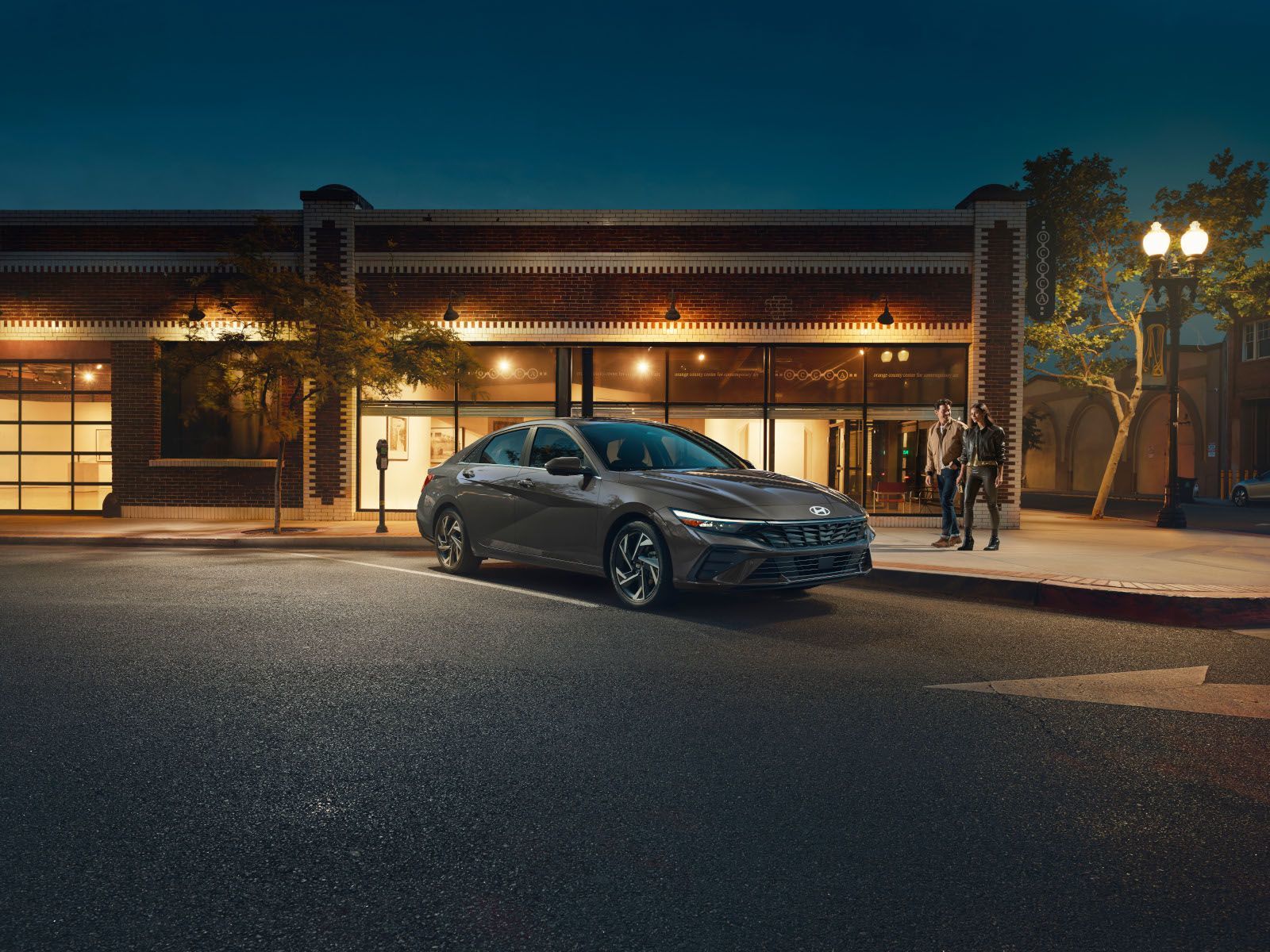
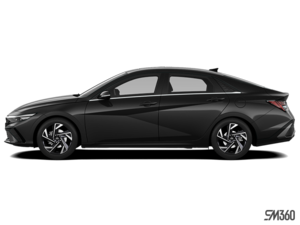
A daily commute changes with the seasons, from wet autumn mornings to cold winter drives. The 2026 Elantra gives New Brunswick drivers three distinct ways to handle that range of driving: a familiar gas engine, a fuel-sipping hybrid, and a turbocharged option built for a livelier commute.
Each setup suits a different kind of driver. Rather than picking one “best” Elantra, this guide matches each powertrain to the way you actually drive.
2026 Elantra Powertrain Comparison
|
Spec |
Gas (Essential/Preferred/Luxury) |
Hybrid (Luxury Hybrid) |
Turbo (N Line Ultimate) |
|
Engine |
2.0 L I4 |
1.6 L I4 hybrid |
1.6 L turbo I4 |
|
Horsepower |
147 hp |
139 hp |
201 hp |
|
Torque |
132 lb-ft |
195 lb-ft |
195 lb-ft |
|
Transmission |
Smartstream IVT |
6-Speed EcoShift DCT |
7-Speed DCT |
|
Combined fuel economy |
6.8–6.9 L/100km |
4.7 L/100km |
7.6 L/100km |
|
Wheels |
15" to 17" alloy |
17" alloy |
18" alloy |
All three powertrains route power through the front wheels only, so drivetrain isn’t the differentiator here. The differentiator is how each one feels and how much fuel it uses getting you there.
How Each Powertrain Actually Drives
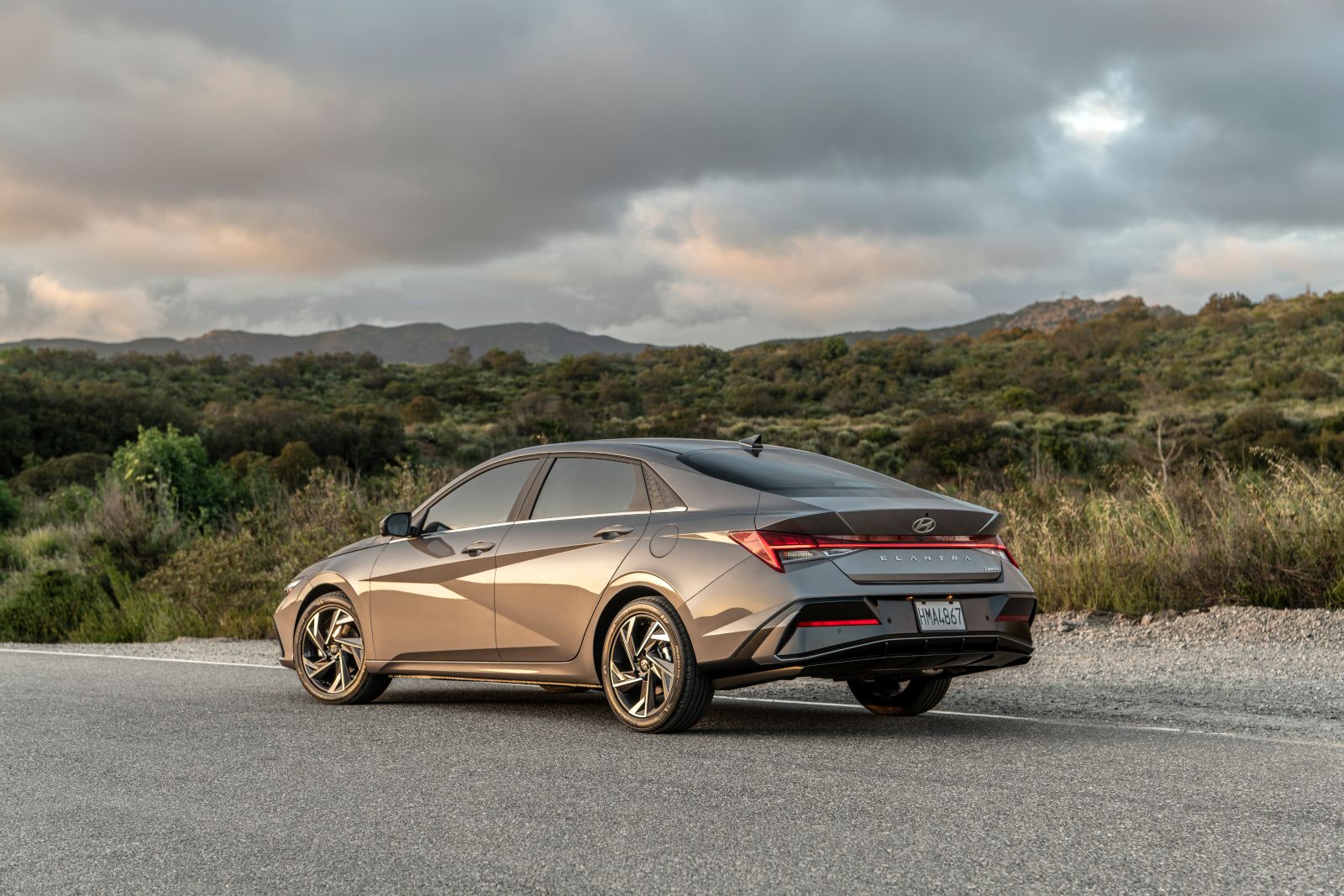
The 2.0 L gas engine is the Elantra’s all-rounder. Its 147 hp and 132 lb-ft pair with the Smartstream IVT for smooth, predictable power delivery. There’s nothing to learn or adjust to. Press the pedal, and the car responds the way a compact sedan should.
That simplicity is the point. For a driver who wants a straightforward car for grocery runs, work commutes, and the occasional highway trip to visit family, the gas engine covers the job without asking the driver to think about it.
The hybrid changes the character rather than the outright power. Its 1.6 L engine works with a 43 hp electric motor for a combined 139 hp, but the standout number is torque: 195 lb-ft, matching the turbo. That torque arrives early, from the electric motor, so the hybrid feels responsive from a stop, which matters more in stop-and-go city traffic than on the open highway.
The 6-Speed EcoShift DCT shifts more directly than the IVT, giving the hybrid a slightly firmer, more engaged feel at low speeds even though it’s tuned around efficiency, not speed.
The N Line Ultimate’s turbocharged 1.6 L is the outlier. At 201 hp and 195 lb-ft, it has real acceleration behind it, and the 7-speed DCT is quicker to respond than the IVT in the other trims. This is the setup built for a driver who wants the Elantra to feel eager, not just adequate, on a highway on-ramp or a passing lane.
Fuel Economy and New Brunswick Commuting
The numbers separate cleanly by use case. The hybrid’s 4.7 L/100km combined rating (4.8 city, 4.5 highway) is built for repeated short trips and stop-and-go driving, exactly where a hybrid’s electric motor does the most work.
The gas engine’s 6.8–6.9 L/100km combined figure is the middle ground: efficient enough for daily use, without asking the driver to manage anything.
The turbo trades some of that efficiency for performance, landing at 7.6 L/100km combined. For a driver who wants stronger acceleration on a regular basis, that’s a fair exchange. For a highway-heavy commute, it’s worth weighing against the hybrid’s 4.5 L/100km highway rating.
Across a New Brunswick winter, none of the three powertrains changes drivetrain behaviour, since all three are front-wheel drive. What changes is how much fuel a longer, colder commute burns, which is where the hybrid’s advantage compounds over a season of short trips.
Equipment Tied to Each Powertrain
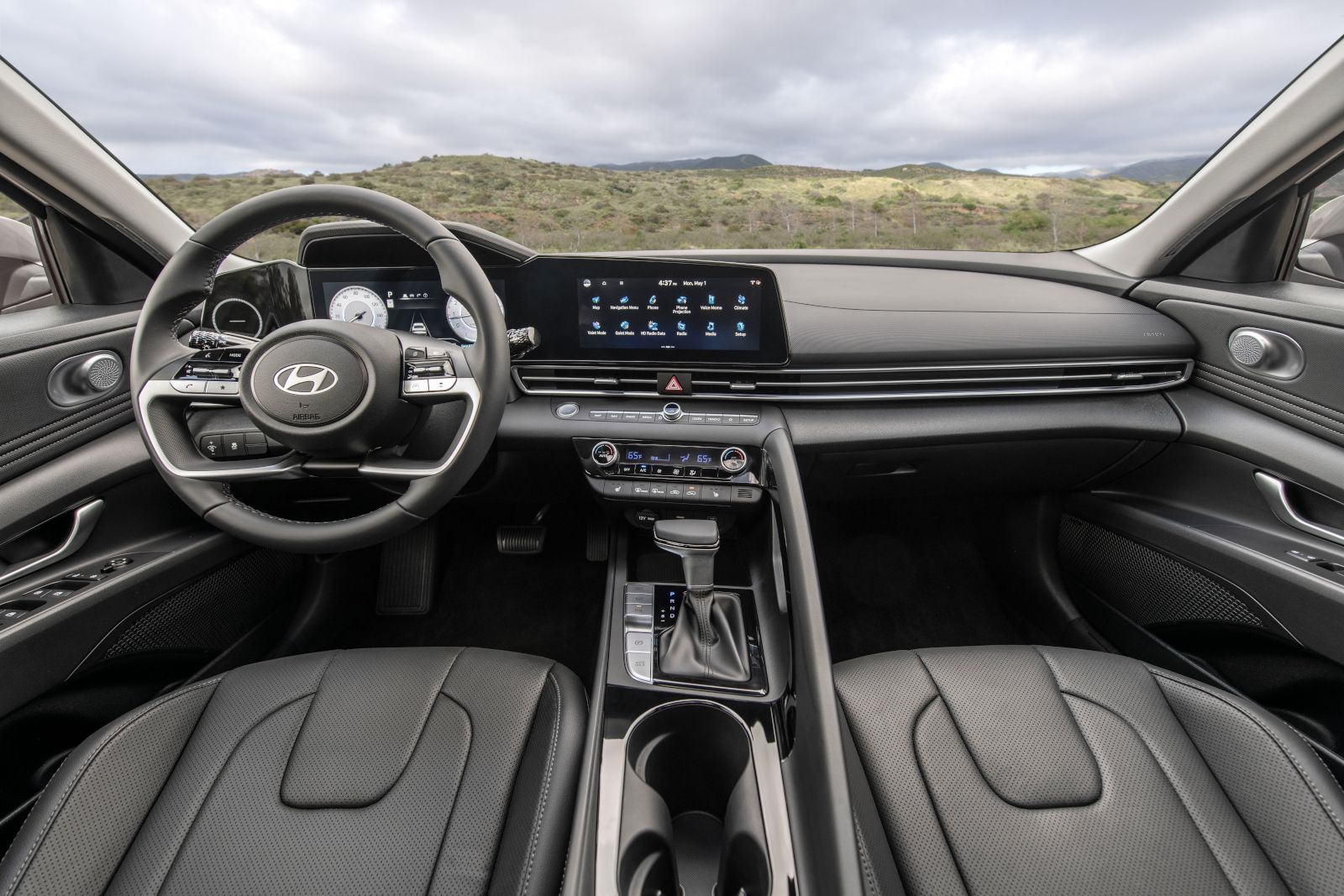
The hybrid isn’t just an efficiency swap; it arrives on the Luxury Hybrid trim, which brings leatherette seating, a Bose 8-speaker premium audio system, a wireless charging pad, dual-zone automatic climate control, and Highway Driving Assist with adaptive cruise control that includes stop-and-go traffic support. That’s a more finished cabin than a basic economy hybrid typically offers.
The N Line Ultimate builds on the same Luxury-level equipment and adds sport leather seats, a power 8-way driver’s seat, aluminum sport pedals, a leather-wrapped sport steering wheel with paddle shifters, and 18-inch alloy wheels, along with a sport-tuned suspension and steering setup, and larger brakes at both ends.
The gas engine spans a wider range of trims, from the Essential’s 15-inch wheels, 8-inch touchscreen, and cloth seating up through the Luxury trim’s leatherette seats and Bose audio. That means the gas engine is the only powertrain available at the Elantra’s most accessible equipment level.
Matching the Powertrain to Your Priorities
If efficiency and low-stress city driving top the list, the hybrid’s 4.7 L/100km combined rating and low-end torque make it the strongest fit, and it comes with a cabin that doesn’t feel like a stripped-down economy special.
If a straightforward, familiar sedan experience matters most, and access to the Elantra’s full trim range from Essential up to Luxury, the 2.0 L gas engine covers that without complication.
If the drive itself is the priority, and stronger acceleration on the highway on-ramp is worth a bit more fuel, the N Line Ultimate’s 201 hp and firmer chassis tuning deliver that energy.
Features can matter as much as the engine. A shopper drawn to the hybrid’s cabin equipment but less interested in the fuel savings might still find the same amenities on a gas-powered Luxury trim, since that equipment isn’t exclusive to the hybrid powertrain.
Finding Your 2026 Elantra at Thomas Hyundai
The 2026 Elantra’s three powertrains cover commuting, efficiency, and performance without forcing a single choice on every driver. Each one changes how the sedan feels day to day, from fuel use to acceleration to cabin equipment.
Visit Thomas Hyundai in Woodstock to compare the gas, hybrid, and N Line Ultimate powertrains in person, and book a test drive to feel the difference in seat time, cabin comfort, and visibility for yourself.