How Much Gear Fits in the 2026 Hyundai Tucson
September 25 2026,
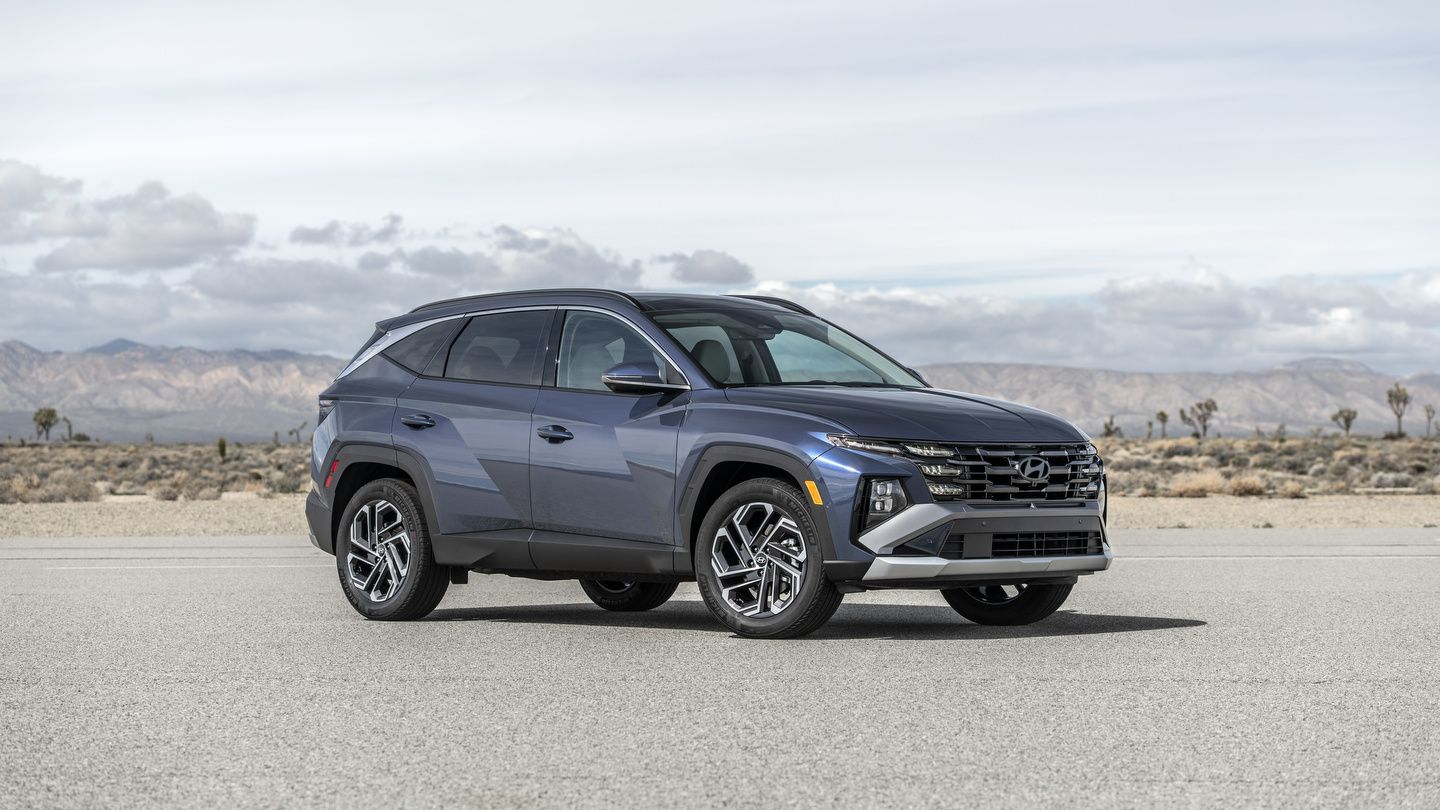
Hockey bags, stroller, four suitcases, a last-minute grocery run: your SUV needs to swallow all of it without a second thought. If you’re shopping in New Brunswick and cargo room is the deciding factor, the 2026 Hyundai Tucson deserves a closer look before you assume you need something bigger.
The answer isn’t one number. It changes depending on which Tucson powertrain you choose, and how you use the rear seats. Here’s what actually fits, and which version balances space with everything else you want from a daily driver.
Why Cargo Space Isn’t One-Size-Fits-All on This SUV
The Tucson comes in three powertrain families: a 2.5 L gas engine, a 1.6 L turbo hybrid, and a 1.6 L turbo plug-in hybrid. The space behind the rear seats shifts along with your engine choice.
That’s the detail a lot of shoppers miss when they compare Tucson trims by feature list alone. Choosing hybrid or plug-in hybrid isn’t just a fuel decision, it’s a cargo decision too.
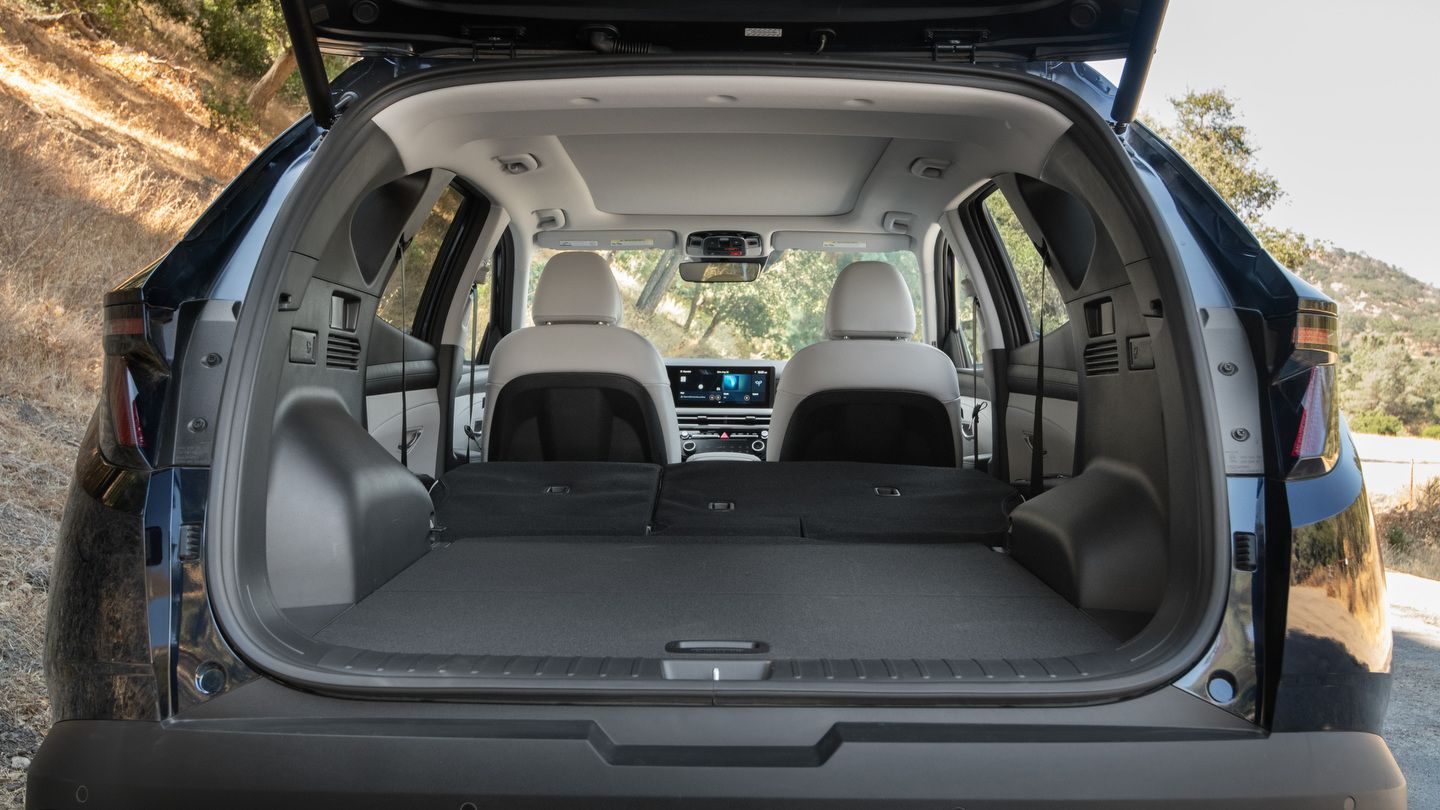
What Each Tucson Powertrain Actually Holds
All three powertrains use the same 60/40 split, reclining rear seatback, so folding for a bigger load works the same way regardless of which engine is under the hood. Here’s how the cargo space itself compares.
|
Powertrain |
Behind Rear Seats |
Seats Folded |
|
2.5 L Gas (Preferred, Trend, XRT) |
1,095 L |
2,119 L |
|
1.6 L Turbo Hybrid (N Line, Ultimate) |
1,097 L |
2,108 L |
|
1.6 L Turbo Plug-in Hybrid (Ultimate) |
902 L |
1,876 L |
With the rear seats up, the gas and hybrid Tucsons land almost identically around 1,095 to 1,097 L. That’s enough for a full grocery run, a folded stroller, a couple of hockey bags, and carry-on luggage for a family trip, all without touching the rear seatback.
The plug-in hybrid gives up roughly 195 L in that same space, a trade-off for the larger battery pack that delivers its 51 km of electric range. It still handles everyday errands and a stroller with room to spare, but it’s the tightest of the three when the back seat stays up.
Fold the seats flat and the story shifts again. The gas and hybrid Tucsons open up past 2,100 L, enough for flat-pack furniture, a bike with the front wheel off, or several oversized boxes from a move. The plug-in hybrid still expands to 1,876 L folded, which covers most of that same list, just with less margin for an odd-shaped item.
Who This Cargo Space Actually Fits
Five-passenger seating is standard across the lineup, so the real question isn’t how many people fit, it’s how much room is left once they’re all buckled in. A family that regularly drives with three kids and their gear will feel the difference between 1,095 L and 902 L every single week, not just on moving day.
For buyers hauling hockey equipment, strollers, or weekly errands with the rear seats up, the gas or hybrid Tucson keeps more usable floor space without asking you to fold anything. For weekend projects, that same duo’s fold-flat 2,100-plus litres often replaces the need to step up to a larger, pricier SUV altogether.
Drivers who want the plug-in hybrid’s electric range and stronger combined output should know the trade-off going in: less room behind the second row, though still enough for daily life and most weekend loads once the seats fold down.
Every Tucson also includes cargo area under-floor storage for smaller items you don’t want rolling around, and the Trend package, XRT, N Line, and Ultimate trims add a proximity-activated smart power liftgate, useful when your arms are already full.
Choosing Gas, Hybrid, or Plug-in Hybrid Based on What You Haul
If maximum cargo room with the seats up matters most, the gas or hybrid Tucson gives you the most flexible everyday space, and the difference between the two comes down to powertrain rather than cargo. If electric commuting range is worth more to you than the last 195 L of cargo space, the plug-in hybrid still handles groceries, sports gear, and a folded stroller comfortably.
Passenger comfort factors in too. Passenger volume runs 3,065 L on the gas Tucson, 3,055 L on the hybrid, and 3,000 L on the plug-in hybrid, so the space trade-off touches the cabin as well as the trunk. For most New Brunswick households juggling kids, gear, and weekend hauls, the gas or hybrid Tucson strikes the closer balance between rear-seat room and cargo capacity.
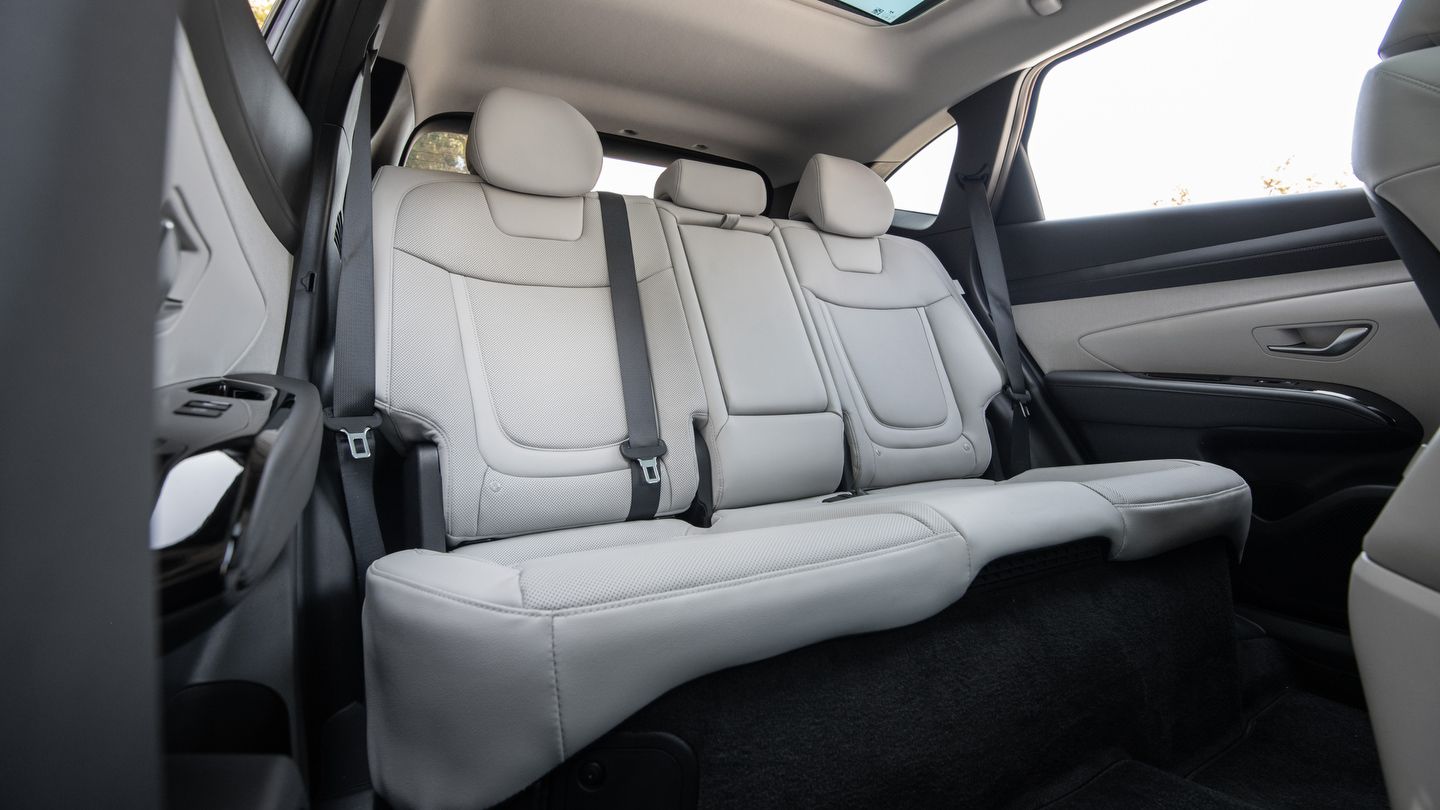
See the Tucson’s Cargo Room for Yourself
The 2026 Tucson’s cargo space changes with the powertrain you pick, from 902 L to 1,097 L behind the rear seats and up to 2,119 L with them folded flat. Under-floor storage and a 60/40 split seatback round out the practical details that matter on hauling day.
Visit Thomas Hyundai in Woodstock to load your own stroller, hockey bag, or suitcase into a Tucson and check the fit in person before you decide which powertrain works for your routine.